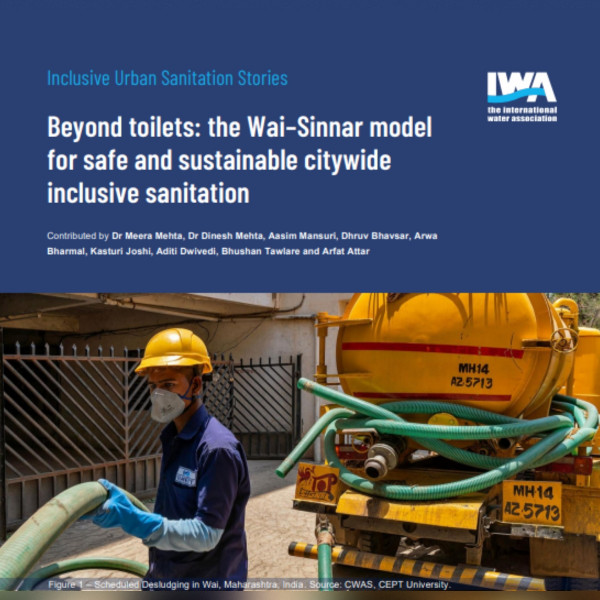
Beyond toilets: The Wai–Sinnar model for safe and sustainable citywide inclusive sanitation
January 2023
Wai and Sinnar are located in Maharashtra. Wai is a pilgrim city with a population of 43,000, whereas Sinnar is a rapidly emerging industrial city with a population of 74,000. Together these two are representatives of more than 7,400 small and medium cities in India where over 40% of India’s urban population resides. Like many other settlements in India, Wai and Sinnar faced sanitation-related issues such as open defecation, disposal of untreated faecal waste (includes both faecal sludge and septage) in the open, financial constraints in providing safe sanitation services and growing environmental pollution. However, both the cities have now overcome these issues and are providing improved sanitation services across the value chain. Wai and Sinnar carried out a unique “Own Toilet scheme” offering subsidies to households for construction of an individual toilet, even before the launch of the Swachh Bharat Mission (SBM). They are also the first localities in India to implement the city-wide scheduled emptying of septic tank services and among the few to have a dedicated Faecal Sludge Treatment Plant (FSTP). All the initiatives undertaken to improve the sanitation services have been inclusive and sustainable in terms of finance and operations through partnerships with the private sector and using the city’s own funds. Both local governments took ownership of the initiatives and institutionalized them through partnerships with the private sector and ordinances of the city council. Wai and Sinnar have now emerged as models for other small and medium settlements of India in the sanitation sector. In addition, many small cities in South Asia and Africa facing similar issues can learn from their experience (CWAS, CEPT University). Wai and Sinnar have demonstrated that, for small and medium settlements, it is feasible to offer high quality, affordable, equitable and inclusive sanitation services to all the citizens.
You can read the article here.